Word Search Hotel
- 4.9
- Rating
- 100.00K
- Installs
- Free
- Price

 Analysis by App-foxy
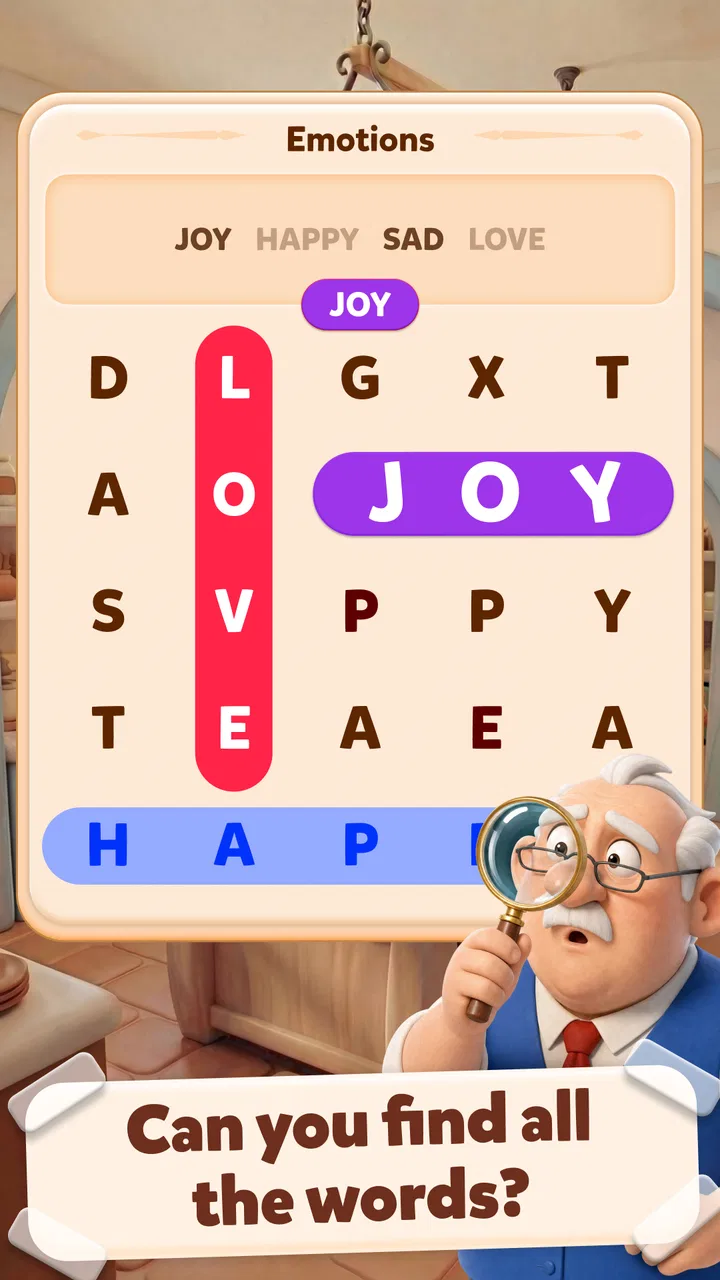
I approached Word Search Hotel as a relaxing word game first, but it quickly showed me that its appeal comes from combining familiar letter hunting with a light hotel-improvement theme. The basic challenge is easy to understand: find hidden words, work against the clock, and use the progress to give charming hotels a makeover. That simple loop makes it approachable, yet the timer gives each puzzle a little more urgency than a traditional word-search book.
It is developed by Lotum two GmbH and sits in the word-game category. The game is free to start, suitable for Everyone, and currently listed as version 1.24.0. It has reached over 100 thousand installs, with an average rating of 4.9 from more than 700 ratings. Those figures suggest that its central idea is landing well with players, although I would still judge it by whether the moment-to-moment play suits you rather than by the rating alone.
How the word-search and hotel loop feels in practice
The first thing I liked is how quickly a session gets going. There is no complicated rule set to memorize. I look across a grid of letters, trace words in different directions, and try to keep moving before the clock becomes a problem. That makes it a good fit for short breaks, especially when I want something more involving than passive scrolling but less demanding than a full strategy game.
You May Also Like

 Blood Strike: 2.5 Anniversary
Blood Strike’s Loadouts Turn Every Drop Into a Tactical Gamble
A close look at Blood Strike’s custom loadouts: how fast access to signature weapons reshapes its battle royale rhythm, rewards preparation, and narrows the gap between fights.

 Pandora - Music & Podcasts
Pandora’s Music Is Easy to Start, but Harder to Recover
Pandora’s strength is its low-effort path from a seed to a station. Its weak spot is how much confidence it asks you to place in connection, setup, and quiet recovery.

 8 Ball Pool
 Is Built on Rivalries, Rematches, and Routine
A close look at the rivalries, rematches, shared routines, and unanswered safety questions that turn a quick pool match into a persistent mobile community.

 Samsung Music
’s Quiet Strength Is Playing What You Already Own
Its reach comes less from spectacle than from dependable access to a personal library. That simplicity is both the app’s strongest retention engine and its ceiling.

 AccuWeather: Weather Radar
AccuWeather Review: A Quick, Clear Forecast for Everyday Decisions
For everyday plans, the best forecast is the one you can understand quickly. AccuWeather makes rain timing, radar, and local conditions easy to act on, with a few trade-offs.

 Hill Climb Racing
Why Hill Climb Racing Still Turns Crashes Into One More Run
A tiny car, a bumpy hill and one more upgrade: Hill Climb Racing keeps resurfacing because its simple chaos makes every near-miss feel personal.
More From Our News Desk
View All News


The hotel setting gives the puzzles a clearer sense of purpose. In a plain word-search app, completing a board can feel like the end of the activity. Here, the result feeds into a broader visual objective: improving a hotel. That extra layer matters because it gives me a reason to care about the next puzzle, even when the word hunt itself is built from a familiar format.
I found the timer to be the most important design choice. Without it, I would naturally scan every row and column at my own pace. With it, I have to decide whether to search methodically or make a quick guess about where a word might be hiding. The pressure is usually gentle enough for casual players, but it still creates a noticeable difference between simply spotting words and spotting them efficiently.
My preferred approach is to begin with the longest or most unusual-looking word in the list. Those are often easier to locate because their letter patterns stand out. If I start with short common words, I can waste time checking too many possible combinations. This is one of the small habits that makes the timed format feel fairer: the game rewards a better search order, not just a larger vocabulary.
Another useful habit is to scan for distinctive letter pairs rather than reading every line from left to right. When I see a rare combination in the target list, I look for its opening letter and then check the surrounding directions. This reduces the feeling of randomly sweeping across the board. It also makes the game more satisfying because improvement comes from observation and technique, not only from playing faster.
Why the hotel theme makes a difference
The makeover element is not just decoration in my experience. It changes the emotional rhythm of the game. A completed puzzle feels like a small contribution to a larger project, and that is more motivating than a sequence of disconnected grids. Players who enjoy renovation, decorating, or gentle progression systems will probably find this structure more inviting than a bare word-search utility.
At the same time, the theme will not replace the puzzle itself. If you dislike searching letter grids, the hotel presentation is unlikely to change your mind for long. The makeover idea works best as a reason to continue, not as a substitute for strong word-search gameplay. I would recommend it to someone who enjoys both simple puzzles and visible progress, rather than to someone looking for a deep decorating simulator.
The presentation also makes it easier to play in different moods. I can treat a round as a focused timed challenge, or I can approach it as a calm progression activity and accept that I may not perform perfectly every time. That flexibility is valuable on a phone, where the same game may be opened during a commute, before bed, or while waiting for an appointment.
What the current version tells me about the experience
The current release is version 1.24.0, and that is useful context for anyone comparing the game with an older installation. It indicates that the product has moved beyond its earliest build rather than remaining at a launch-stage version. I would expect the present experience to be the one most existing players are discussing, so a review based on an old release would not be especially helpful here.
The game was released on March 26, 2026, which makes the version history particularly relevant when judging its current direction. I would not treat the version number as proof of any specific new feature, because a version label alone does not explain what changed. What I can say is that the app is being presented in a current, actively numbered release, and that gives new players a sensible point of entry.
For someone already playing, the practical effect of using the current version is straightforward: check that the installed build matches the latest available release before deciding that a behavior or interface detail represents the game as a whole. A word game can feel very different after small adjustments to pacing, puzzle presentation, or progression, so keeping the app updated is the most reliable way to experience the version the developer currently supports.
Lotum two GmbH has chosen a format that is easy to explain but has room for gradual refinement. The important question for existing users is whether future updates continue to improve the balance between speed, readability, and the hotel progression. Those are the parts of the design that most directly affect daily play. New visual content can be pleasant, but smoother puzzle flow would matter more to me.
A realistic everyday session
Imagine having ten minutes before a meeting. A large, story-heavy game would be awkward because it may require a long uninterrupted session. Word Search Hotel fits that gap better. I can open it, complete a puzzle or make partial progress, and put the phone away without needing to remember a complicated chain of events. The timed structure gives the short session a clear shape, while the hotel objective makes it feel like progress rather than a disposable distraction.
There is also a useful middle ground for families. Because the content rating is Everyone, the concept is accessible to a broad audience. A younger player can focus on spotting familiar words, while an adult can help with search strategy and timing. I would still consider the timer when choosing it for a child: some players find countdowns exciting, while others find them frustrating. The game is approachable, but the pressure is not identical to a completely untimed puzzle book.
For language learners, the game may offer a modest vocabulary exercise, especially when an unfamiliar word appears in the target list. However, I would not use it as a structured language course. The main goal is finding words quickly, not explaining definitions or teaching grammar. It can support recognition and spelling awareness, but anyone seeking lessons, pronunciation practice, or detailed vocabulary feedback should choose a dedicated learning app instead.
Where it stands beside familiar alternatives
Compared with a printed word-search book, this game is more immediate and more motivating for players who like visible progression. The timer adds challenge, and the hotel setting gives each round a context. The trade-off is that paper offers a slower, quieter experience without screen fatigue or time pressure. If your ideal word search is something to do at a relaxed pace with a pencil, the traditional alternative may suit you better.
Compared with a standard digital word-search app, the hotel theme is the main distinction. A minimalist app may be better if you want to open a puzzle, solve it, and leave without any additional layer. This game is stronger when the surrounding makeover goal helps you stay interested. In other words, the extra theme is a benefit for progression-minded players and unnecessary friction for people who want a pure puzzle tool.
It also differs from competitive word games that focus on forming words from a rack of letters or battling another player. Here, the skill is visual scanning under time pressure rather than constructing the highest-scoring vocabulary. That makes it less socially competitive and more self-contained. I would choose it for a quiet personal challenge, not for multiplayer rivalry or elaborate strategic word building.
Small strategies that improve the timed puzzles
My most effective routine is to divide the board into zones instead of scanning the entire grid repeatedly. I move across one area, check the target list, and then continue to the next. This prevents the common mistake of revisiting the same comfortable rows while ignoring the edges. It is especially helpful when the clock is running because a consistent route is easier to maintain than frantic searching.
I also avoid using a hint or assistance immediately after getting stuck. First, I change the search direction: horizontal, vertical, then diagonal. If I still cannot see the word, I look for repeated letters or a distinctive ending. This gives me a better chance of learning the board’s visual patterns. The trade-off is obvious, though: if the goal is simply to finish quickly, persistence may cost more time than it saves.
Another practical tip is to treat the timer as a reason to prioritize, not as a demand to panic. Some words are naturally easier to find, and clearing them quickly reduces visual clutter in the list. I try to collect those early, then spend the remaining attention on awkward or less familiar entries. That approach feels more controlled than attempting to solve the list in the order shown.
The makeover progression can also influence how I play. When I am interested in seeing the next hotel improvement, I am more willing to attempt another round after a poor result. When I am tired, I stop treating the clock as a score to defend and simply enjoy the search. The game works better for me when I choose the mood in advance instead of expecting every session to be equally competitive.
Where the experience may create friction
The biggest limitation is built into the concept: timed word searches are not equally comfortable for everyone. Players with slower visual processing, limited vocabulary in the game’s language, or a preference for unhurried puzzles may feel that the clock gets in the way. The hotel theme can make failure less discouraging, but it cannot remove the basic pressure of racing against time.
The progression layer may also be too light for players who need a complex management system. If you are expecting detailed room planning, resource balancing, or a deep renovation sandbox, this is probably not the right choice. Its hotel component exists to frame the word puzzles and encourage continued play. I see that as a strength for casual sessions, but a weakness for anyone looking for a full design game.
Because the game is free, in-app purchases are part of the product, with individual items ranging from $0.99 to $99.99. That range is worth keeping in mind before handing the phone to a child or allowing unrestricted purchasing. I prefer to decide in advance whether I am comfortable spending anything, rather than letting the surrounding progression influence that decision during a particularly engaging session.
The free entry point makes it easy to test the core loop without committing money upfront. Still, free access does not automatically mean the experience will suit every player. If you dislike timed puzzles, no purchase option will solve that mismatch. I would try several sessions first, paying attention to whether the hotel objective genuinely adds motivation or merely delays the next puzzle.
Who should install it, and who should skip it
I would recommend it to casual players who enjoy word searches but want more structure than a stack of unrelated boards. It is also a good match for people who like gentle makeover themes, short mobile sessions, and challenges that reward visual attention rather than complicated planning. Families may appreciate the accessible premise, provided the timer feels encouraging rather than stressful for the person playing.
I would be more cautious about recommending it to serious word-game enthusiasts who want definitions, advanced vocabulary training, or competitive rankings. The attraction here is the combination of searching, speed, and hotel progress. Someone seeking a rigorous language tool or a highly strategic word battler will probably get more value from a specialized alternative.
It is also not my first choice for completely screen-free relaxation. The digital format is convenient, but a paper puzzle remains better for anyone who wants a quiet activity without notifications, battery concerns, or the visual intensity of a countdown. The right choice depends less on whether one format is objectively superior and more on whether you want progression and pacing built into the experience.
What I would watch as the game develops
For future updates, I would pay closest attention to how the balance between accessibility and time pressure evolves. The best direction would be one that keeps fast solving rewarding without making slower players feel excluded. Clearer ways to practice, replay, or improve technique would also strengthen the game because they would turn frustration into a learning curve.
I would also watch whether the hotel side continues to feel meaningful as players move forward. The theme is most effective when each puzzle contributes to a visible sense of improvement. If it becomes only a repeated backdrop, the word-search mechanics would have to carry the entire experience. On the other hand, thoughtful visual progression could keep the game appealing even for players who already know the basic puzzle format well.
Existing users should judge updates by their effect on everyday play rather than by version numbers alone. Does a session feel easier to start? Is the board comfortable to read? Does the timer encourage another attempt instead of causing irritation? Those are the practical questions I would ask after an update. They matter more than simply seeing a newer build installed.
For new players, the current version gives a clear opportunity to experience the game in its present form, while the recent release date means expectations should remain grounded in what is available now rather than in promises about future additions. I would not install it expecting a particular upcoming feature. I would install it because the existing mix of word searching and hotel improvement sounds enjoyable.
My overall recommendation
After spending time with it, I see Word Search Hotel as a friendly, focused word game with a useful extra layer. Its strongest quality is not originality in the basic puzzle mechanic; it is the way the hotel objective gives familiar searches a reason to continue. The timer adds enough tension to make routine scanning feel active, while the accessible presentation keeps the game easy to pick up.
Its limitations are equally clear. The timed format will not satisfy players who want completely relaxed solving, and the hotel element should not be mistaken for a deep renovation simulator. The purchase range also deserves sensible parental and personal spending controls. Those points do not ruin the experience, but they define who will enjoy it most.
For me, this is a good recommendation when I want a short, repeatable puzzle session with visible progress. I would choose it over a basic word-search app when the makeover theme helps me stay engaged, and I would choose a different game when I want competition, language lessons, or detailed decorating decisions. If that distinction matches what you are looking for, Word Search Hotel is an easy free download to try, with enough personality to make a familiar word format feel worthwhile.
FAQs for Word Search Hotel
01What is Word Search Hotel and how does it work?
Word Search Hotel is a puzzle game that challenges players to find hidden words within a grid of letters. Players can choose from various difficulty levels, themes, and grid sizes. The game enhances vocabulary and cognitive skills by offering a relaxing yet stimulating experience. Perfect for both casual and avid puzzle enthusiasts.
02Is Word Search Hotel free to download and play?
Word Search Hotel is free to download on both Android and iOS platforms. While the core gameplay is free, there are in-app purchases available that offer additional features such as ad-free play, extra hints, or themed word packs. These purchases are optional and can enhance the gaming experience.
03Does Word Search Hotel require an internet connection?
While Word Search Hotel can be played offline, having an internet connection enhances the experience. An online connection allows access to daily challenges, leaderboard updates, and syncing progress across devices. However, if you're playing purely for offline enjoyment, the core game functions perfectly without internet.
04Are there any advertisements in Word Search Hotel?
Yes, the free version of Word Search Hotel includes advertisements. These ads help support the developers and maintain game updates. Players can opt for an ad-free experience by making an in-app purchase. This option is perfect for those who prefer uninterrupted gameplay.
05How does Word Search Hotel ensure user privacy and data security?
Word Search Hotel adheres to strict privacy policies to ensure user data is protected. The app collects minimal data necessary for gameplay, such as progress and in-app purchases. Users can review these policies in the app’s settings or on the developer’s website to ensure they are comfortable with how their information is handled.
Pros
- User-friendly interface makes navigation easy.
- Variety of themes keeps gameplay fresh.
- Offline mode available for on-the-go play.
- Regular updates with new puzzles added.
- Minimal ads for uninterrupted gameplay.
Cons
- Limited hints can be frustrating for beginners.
- Repetitive ads can become annoying.
- Lacks multiplayer or social features.
- Some puzzles feel too easy for advanced users.
- In-app purchases can be expensive.

Word Search Hotel
Gallery